Beyond the Rectangle: How Spatial Computing Is Merging digital Life with Reality
For nearly fifty years, our interaction with computers has lived inside strict boundaries. We started with bulky CRT monitors, moved to sleek flat screens, and eventually shrank everything down to glass rectangles in our pockets. But no matter how crisp a smartphone display gets, it remains an island—a tiny portal you have to stop, look down at, and disconnect from the physical world to use.
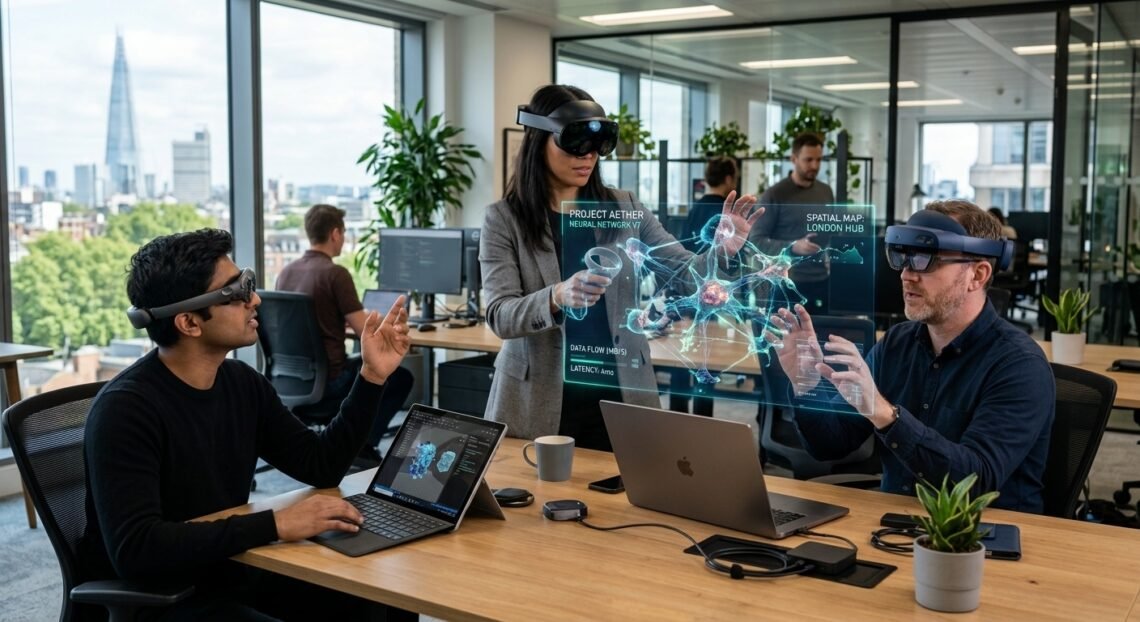
That boundary is finally dissolving. We are currently living through a fundamental shift in interface design, moving away from flat screens toward Extended Reality (XR) and Spatial Computing. Instead of forcing our thoughts into a 6-inch glass rectangle, spatial computing turns the real world into our canvas.
Unpacking the Tech Jargon: XR vs. Spatial Computing
It’s easy to get lost in the sea of buzzwords floating around tech feeds right now. Extended Reality (XR) is simply the umbrella term that covers the entire spectrum of immersive technologies:
- Virtual Reality (VR): Completely replaces your physical environment with a digital one.
- Augmented Reality (AR): Overlays digital information, like text or 3D graphics, directly onto the physical world through glasses or phone screens.
- Mixed Reality (MR): Blends physical and digital elements so thoroughly that real-world objects and virtual objects can interact in real time (for example, a virtual ball bouncing off your physical coffee table).
Spatial Computing, on the other hand, is the broader design philosophy that powers it all. It refers to systems that understand the geography of your physical space—using cameras, LiDAR sensors, and computer vision—to place digital content permanently within your environment. A virtual calendar pinned to your physical kitchen wall stays on that wall, right where you left it.
                   [ THE REAL WORLD ]
                           |
                           v
              [ SENSOR MAPPING & LIDAR ]
                           |
            +--------------+--------------+
            |                             |
            v                             v
  (Passthrough Mixed Reality)    (Full Virtual Isolation)
  Digital objects interact       Complete digital replacement
  with physical surfaces.        of your surroundings.
Why Now? The Hardware Breakthroughs
People often ask why spatial computing didn’t take off a decade ago when the first modern VR headsets hit store shelves. The short answer: the technology wasn’t fast or light enough to feel natural.
To make digital objects look genuinely solid in a physical room, devices require incredible computing power and near-zero latency. Over the past few years, three critical hardware shifts made this possible:
| Feature | Past Generation | Current Spatial Devices |
| Passthrough Quality | Grainy, black-and-white, disorienting lag | Ultra-high-resolution, full-color, sub-12ms latency |
| Tracking System | External base stations and bulky plastic controllers | Micro-cameras tracking eye movements and subtle finger pinch gestures |
| Display Tech | Standard LCD/OLED panels with visible pixels | Micro-OLED displays delivering 4K resolution per eye |
Instead of holding plastic wands, modern spatial headsets track your eyes to see what you are looking at and read your hand pinch gestures to select items. It removes the controller layer entirely, making digital navigation feel as intuitive as picking up a physical pen.
Beyond Gaming: Where Spatial Computing Works Today
While video games were the early testing ground, spatial computing is rapidly transforming professional workflows across industries.
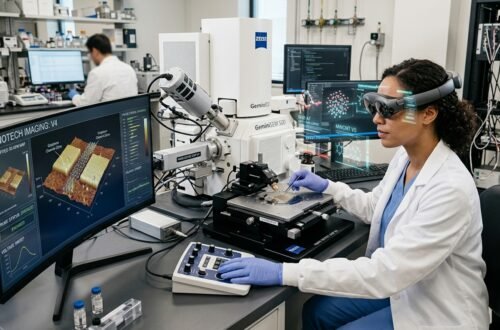
- Surgical Precision: Surgeons now use mixed-reality overlays to view 3D reconstructions of a patient’s anatomy directly over the surgical table during complex procedures, cutting down on surgical time and error rates.
- Industrial Engineering: Mechanics and factory workers wear AR glasses that overlay step-by-step repair manuals onto real machinery, highlighting the exact bolt that needs tightening in real time.
- Architectural Design: Architects no longer present clients with flat blueprints or 3D renders on a monitor. They walk clients through full-scale virtual models of a house before breaking ground, catching design flaws instantly.
The Unsolved Challenges
Despite the impressive progress, spatial computing still faces real hurdles before it can completely replace the traditional laptop or smartphone.
First is the form factor problem. Current high-end headsets, while sleek, still feel like heavy ski goggles strapped to your face. Extended use leads to neck fatigue, and wearing them in public settings still carries a social stigma. Until the underlying hardware can be miniaturized into a lightweight pair of everyday prescription glasses, mass consumer adoption will stay somewhat constrained.
Second is privacy. Spatial devices rely on a constant array of outward-facing cameras and sensors to map rooms and track eyes. This raises huge questions about data security: Who owns the digital map of your living room? How is eye-tracking data protected from advertisers who want to know exactly what corner of an ad you looked at?
The End of the Monitor Era
We are still in the “clunky brick phone” era of spatial computing. The headsets are expensive, heavy, and battery-limited. But the direction of travel is unmistakable.
Eventually, sitting down in front of three glass computer monitors will feel as outdated as dialing into the internet over a copper phone line. As hardware shrinks and display optics improve, spatial computing will quietly absorb the functions of our TVs, laptops, and smartphones—weaving our digital tools directly into the fabric of our physical world.