Beyond Sci-Fi: What Happens When Humanoid Robots Enter the Real World?
For as long as most of us can remember, human-shaped machines belonged squarely in pop culture. They were either the helpful metallic companions of futuristic cities or the terrifying, unstoppable machines of apocalyptic cinema. Either way, they were a distant concept—something researchers tinkered with behind closed laboratory doors while the rest of us went about our daily lives.
Then, almost quietly at first, the narrative changed. Over the past few years, demo videos stopped showing clunky robots taking awkward, mechanical steps and tripping over small door sills. Instead, we started seeing bipeds catching falling objects, maneuvering through active construction zones, and performing delicate assembly work with hands that look surprisingly agile.
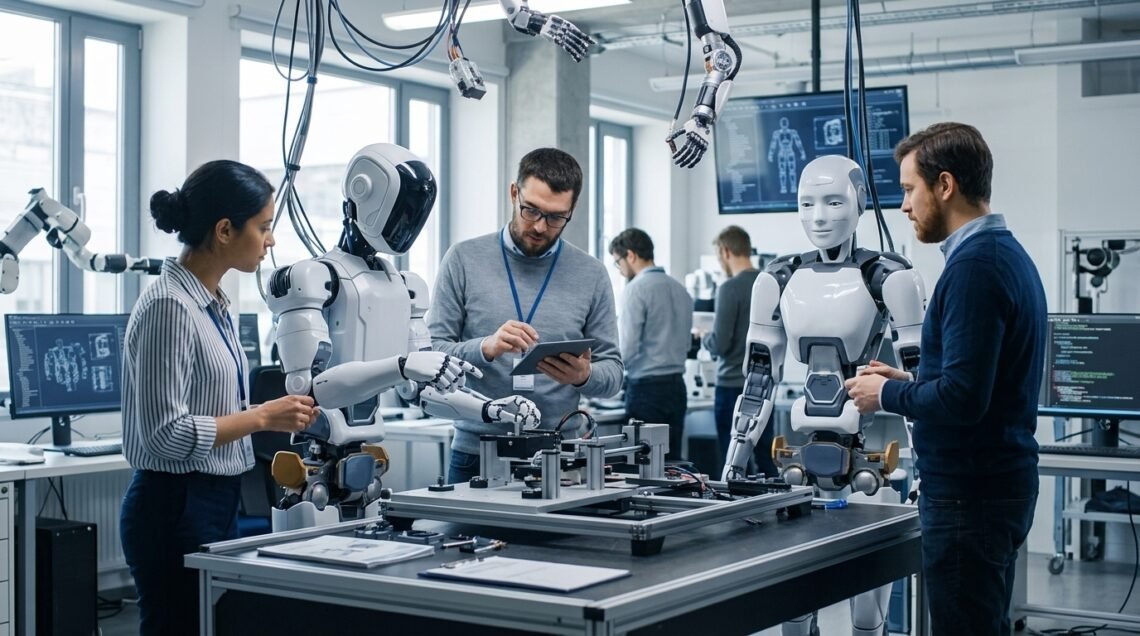
We aren’t watching science fiction anymore. Next-generation humanoid robots are stepping out of controlled test environments and heading straight toward our factory floors, warehouses, and eventually, our homes.
Why Build a Humanoid in the First Place?
It’s a fair question. If you want to automate a warehouse, why bother making a machine that walks on two legs, has two arms, and stands five-and-a-half feet tall? Wheeled rovers are faster on flat concrete, and fixed industrial arms can weld car frames at incredible speeds without ever taking a step.
The answer comes down to one simple reality: we built the entire modern world for the human form factor.
Every staircase, door handle, assembly line workstation, and kitchen counter was designed around human dimensions. If you want a robot to step into an existing logistics facility or commercial kitchen without spending millions of dollars redesigning the physical space, that machine needs to interact with the environment the same way we do.
- Adaptability: A wheeled robot gets stuck at a curb or a flight of stairs. A bipedal robot steps over or climbs right up.
- Tool Usability: Instead of requiring custom power tools or specialized attachments, a humanoid can grip a standard drill, pick up a normal clipboard, or open a regular cabinet door.
- Workspace Integration: They fit into tight aisles and narrow corridors engineered specifically for human workers, avoiding expensive facility overhauls.
The Tech Under the Hood: Why Now?
Building a machine that balances on two feet while carrying a heavy box is an extraordinarily tough engineering problem. If a human trips on a rug, our nervous system adjusts muscles in fractions of a millisecond to catch us. Replicating that balance in metal and silicon took decades of trial and error.
Three major technological leaps finally pushed humanoids past the tipping point:
┌──────────────────────────────────────────────────────────┐
│             Next-Gen Humanoid Stack                      │
├───────────────────┬───────────────────┬──────────────────┤
│ Embodied AI       │ Dynamic Actuators │ Tactile Sensing  │
│ Large multimodal  │ High-torque electric│ Synthetic skin & │
│ models translate  │ motors enable     │ force-feedback   │
│ sight into action │ natural movement  │ hand grippers    │
└─────────┬─────────┴─────────┬─────────┴─────────┬────────┘
          │                 │                   │
          └─────────────────┼───────────────────┘
                            ▼
               Real-World Task Execution
- Embodied AI: Older robots required engineers to write thousands of lines of precise code for every single movement. Today’s humanoids utilize multimodal AI models. You can tell the robot in plain spoken English, “Pick up the red mug and set it near the sink,” and its neural network translates visual input directly into motor control.
- Advanced Actuation: The clunky hydraulic pumps of the past have been largely replaced by compact, high-torque electric motors. These allow for fluid, organic movements that look far less like a classic robot and much more like human muscle control.
- Tactile Feedback: Hands are notoriously difficult to engineer. Modern prototypes use artificial skin laced with pressure sensors, letting the robot pick up an egg without crushing it, then immediately grip a heavy wrench with full force.
Where Will We See Them First?
Don’t expect a walking robot to cook dinner in your home tomorrow afternoon. The commercial rollout is following a practical, phased timeline driven by economic need.
Phase 1: Heavy Logistics and Automotive Manufacturing
Car manufacturers and logistics giants are already running pilot programs. In these environments, humanoids perform repetitive, physically straining tasks—like carrying heavy battery cells or sorting awkwardly shaped packages—that frequently lead to human fatigue and workplace injuries.
Phase 2: Commercial Services and Healthcare
As the technology matures and production costs decrease, humanoids will likely move into eldercare facilities and hospital support roles. They can assist with lifting patients, moving heavy medical supplies, or cleaning sterile rooms, freeing up healthcare staff to focus on actual patient care.
Phase 3: The Household Companion
The final frontier is the home, which is by far the most unpredictable environment a robot can enter. Toys scattered on the floor, unpredictable pets, and varying lighting conditions make home deployment a massive challenge. It will take time, but the goal remains an affordable home helper capable of folding laundry, unloading dishwashers, and keeping households running smoothly.
The Unresolved Questions
As exciting as the progress is, we’re entering uncharted territory. The mass deployment of general-purpose robots raises obvious questions about workforce disruption, safety standards, and regulation.
What safety protocols kick in if a 150-pound metal robot loses power in a crowded room? How do we retrain workers whose day-to-day physical tasks are automated by a machine that never gets tired?
These aren’t reasons to halt progress, but they are reasons to approach the future with intentional planning. The goal isn’t to replace human labor for the sake of it, but to hand off the dangerous, dull, and physically destructive work so humans can focus on tasks that require creativity, empathy, and strategic thinking.
The transition won’t happen overnight, but the trajectory is clear. The era of the general-purpose humanoid robot has officially begun.